

 CALL US NOW
 EMAIL US NOW


Navigating the criminal justice system in Nevada is a complex journey that begins the moment a person interacts with police and continues through various stages of the district court or justice court systems. At Lipp Law LLC, we understand that facing criminal charges is a life-altering event, and our purpose is to provide a clear, comprehensive guide to the legal procedure for our clients and citizens. Whether the matter involves a misdemeanor, a felony, or specialized white collar crimes, the rules of the state are designed to ensure that the rights of the defendant are protected while the prosecution seeks to meet its burden of proof.
When a formal charge is brought forward, the prosecutors in our state must manage a high number of cases, but for the defendants involved, this is often the one most critical hurdle of their lives. A single violation can have a lasting impact on a person’s record, which is why we meticulously analyze every detail of the proceedings. Our defense strategy focuses on ensuring that no procedural error goes unnoticed, protecting the status and future of those we represent throughout every hearing and court appearance.
Law Enforcement Interaction and the Initial Arrest
The process often starts with an investigation or a direct arrest by police officers. During this stage, law enforcement may conduct a search if they have a warrant or if certain circumstances, such as consent or probable cause, allow for it. Every person has the right to remain silent during questioning and the right to an attorney. We emphasize that any statement made during this time can be used as evidence against the defendant later in court. During this initial contact, the transmission of information between the party being questioned and the officer can determine the entire scope of the case, making it vital to understand which things should or should not be said.
In cities like Las Vegas, the volume of cases means that police often follow strict protocols during an arrest. If an offense is committed, such as a DUI or a more severe crime, the police may take the individual into custody. This detention marks the official beginning of the criminal case, and securing a DUI defense lawyer in Las Vegas immediately is vital, as the decisions made by officers regarding the content of their reports are critical. In some instances, a citation is issued instead of a physical arrest, but the legal impact remains significant once the defendant is processed and held in jail pending an initial appearance.
Arraignment Hearing and Posting Bail
The arraignment hearing is the first formal appearance in court. During this proceeding, the judge reads the formal charges or the complaint filed by the prosecutor. The defendant is informed of their rights, and the court addresses the issue of release. This specific hearing serves as the instance where the defendant must enter an initial plea, a decision that sets the tone for the entire defense. Whether the prosecution intends to move quickly toward a trial or is open to negotiations, having an attorney present is non-negotiable for protecting one’s future.
Bail serves as a financial guarantee that the defendant will return for future hearings. The judge has the discretion to set a bail amount based on the severity of the offenses, the defendant’s history, and whether they pose a flight risk. In some cases, a defendant may be released on their own recognizance without posting bail. A bail hearing may be requested by a defense attorney to argue for a reduction in the amount or for a release under specific conditions, such as community service or monitoring.
Entry of Plea and Legal Representation
At the arraignment, the defendant must enter a plea. The most common options are “not guilty,” “guilty,” or “no contest.” We typically advise our clients to enter a “not guilty” plea initially to allow our defense team the opportunity to review the evidence and the discovery documents provided by the state following the formal indictment. During this preliminary phase, we also advocate for reasonable bail and explore options such as plea deals for first-time offenders in Nevada, which can often lead to reduced charges or diversion programs.
Having a skilled criminal defense lawyer is essential during this stage. Our office focuses on protecting the rights of the accused, ensuring that the prosecution adheres to all procedural rules. A defense lawyer acts as counsel, providing a consultation to explain the potential outcomes—from a favorable verdict at trial to the complexities of sentencing should a conviction occur. We ensure that our attorneys are present for every appearance to safeguard our clients’ interests, including filing an appeal if legal errors impact the integrity of the case.
Discovery Process and Pretrial Motions
Following the arraignment, the discovery stage begins. This is a formal legal procedure involving the exchange of information where the prosecution must provide the defense with all documents, witness lists, and the specific charges being pursued. This includes police reports, forensic findings, and any recorded testimony or evidence intended for use at trial.
During this time, we may file motions to challenge the prosecution’s case, such as a motion to suppress evidence. While many cases are resolved through a plea bargain, our team is prepared to fight for a favorable verdict in court. In the event of a conviction, we are also equipped to handle an appeal to ensure your rights were fully protected throughout the judicial process.
Preliminary Hearing and Grand Jury Indictment
In Nevada, for felony cases, the state must prove there is sufficient cause to hold a trial. This is done through either a preliminary hearing in justice court or a grand jury indictment. During a preliminary hearing, a judge hears testimony from a witness and reviews evidence to determine if there is enough proof that a crime was committed. Alternatively, a grand jury may issue an indictment after reviewing the prosecutor’s evidence in private. If the judge or grand jury finds probable cause, the case is “bound over” to the district court. Our defense lawyers use this stage to scrutinize how the prosecution intends to prove the charges and to ensure all parties are compliant with legal discovery rules.
Throughout this procedure, we focus on your rights and the official record to identify weaknesses in the allegations. We may file various motions to challenge the evidence or request a release from custody depending on your bond status. If the matter is not resolved through a plea deal, we are prepared to contest the allegations at trial to pursue a favorable verdict. In the event of a conviction, we meticulously review every detail to determine if there are grounds for an appeal.
Trial Proceedings and the Burden of Proof
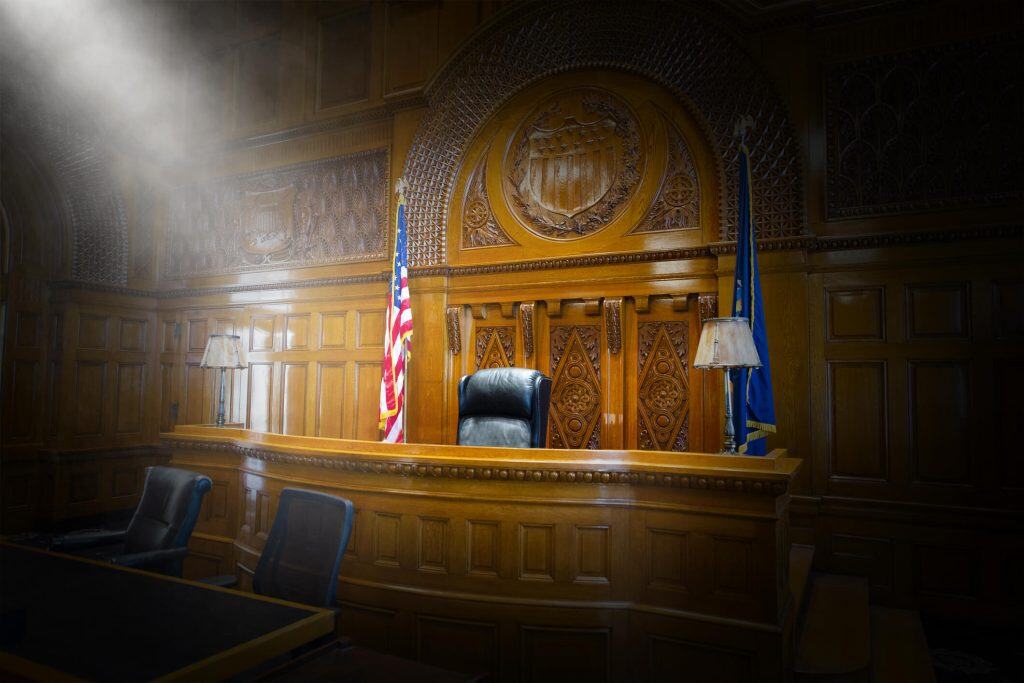
If no agreement is reached, the case proceeds to trial. A defendant has the right to a jury trial, where a group of citizens decides the outcome, or a bench trial, where the judge makes the decision.
The prosecution carries the heavy burden of proving the defendant’s guilt beyond a reasonable doubt. During the trial, both parties present opening statements, perform an examination and cross-examination of witnesses, and introduce physical evidence. The rules of evidence govern what the jury or judge can consider. At the conclusion of the arguments, the jury deliberates to reach a verdict. We stand by our clients through every minute of this trial, ensuring their voice is heard.
Sentencing and Post-Trial Actions
If the verdict is a conviction, the process moves to sentencing. The judge determines the appropriate punishment based on statute, the nature of the crimes, and mitigating or aggravating factors. Punishments can range from fines and probation to incarceration in jail or prison.
The sentencing hearing allows the defense to present information regarding the defendant’s character and the impact of the sentence. In some cases, a victim may also provide a statement. Following the judge’s order, the defendant has the right to an appeal. An appeal is a request for a higher court to review the trial proceedings for legal errors that may have affected the outcome.
Importance of Early Legal Intervention
We believe that the earlier a defense attorney is involved in a case, the better the potential outcome. Whether it is resolving a misdemeanor or fighting felonies, having an attorney who understands the filing of motions, the history of local laws, and the discretion of the district attorney can make a profound difference.
Our defense lawyers are skilled in negotiations, often finding grounds for a plea bargain that avoids the severity of a maximum sentence. We look at every document, every witness statement, and every piece of evidence to build a robust defense. Our status as a trusted criminal defense attorney in Nevada is built on our dedication to justice and our clients.
Protecting Your Future in the Nevada Court System
At Lipp Law LLC, we are committed to guiding our clients through every stage of the Nevada criminal court process. From the initial arrest and arraignment to the final verdict or appeal, we provide the defense and counsel necessary to navigate these difficult times. We understand the rules, the laws, and the importance of a rigorous defense in every case we handle.
Facing the courts alone is a daunting task. The legal system is filled with specific procedures and timelines that can be overwhelming. Let us provide the experience and representation you deserve. Our office is ready to review your case and provide a strategic defense tailored to your circumstances.
Frequently Asked Questions (FAQs)
1. How long does the state have to file formal charges after an arrest?
In custody, Nevada prosecutors usually have 72 hours to file. If you are released, the Statute of Limitations applies: typically 1 year for misdemeanors and 3–4 years for most felonies.
2. What is the difference between Justice Court and District Court?
Justice Court handles misdemeanors and initial felony hearings. District Court is the higher court where felony trials, complex motions, and final sentencing occur after a case is “bound over.”
3. Can I appear in court via video, or must I be there in person?
Many routine status hearings allow video appearances via Zoom. However, for “critical stages” like arraignments, evidentiary hearings, or trials, your physical presence is mandatory unless waived.
4. What happens if I miss a court date?
The judge will likely issue a Bench Warrant for your arrest and forfeit your bail. You must contact your attorney immediately to file a motion to “quash” the warrant before you are taken into custody.
5. What is a “Gross Misdemeanor,” and how is it different from a felony?
A Gross Misdemeanor is an intermediate offense. It is more serious than a misdemeanor but less than a felony, carrying up to 364 days in jail and a fine of up to $2,000.
6. Can my criminal record be sealed after the case is over?
Yes, but a waiting period applies. Most convictions require 1–10 crime-free years after the case closes. Dismissed cases or acquittals are generally eligible for sealing immediately.
7. What is an “Alford Plea”?
An Alford Plea allows you to plead guilty while maintaining factual innocence. You acknowledge that the state has enough evidence to likely convict you, often used to resolve cases and avoid a trial.
8. Who decides if I get a Jury Trial or a Bench Trial?
You have a right to a Jury Trial for offenses with over 6 months of potential jail time. For simple misdemeanors, a Bench Trial occurs where a judge—not a jury—decides the final verdict.
9. Will I have to pay for the “Discovery” documents?
While the state must provide evidence, some agencies charge reproduction fees for body-cam footage or large files. Your defense team typically manages these costs as part of your case expenses.
10. Does Nevada have a “Speedy Trial” law?
Yes. Under NRS 178.556, you are entitled to a trial within 60 days of your District Court arraignment. However, many defendants “waive” this right to allow more time for a robust defense.



 Lipp Law LLC
 (702) 745-4700
 info@LippLaw.vegas

