

 CALL US NOW
 EMAIL US NOW


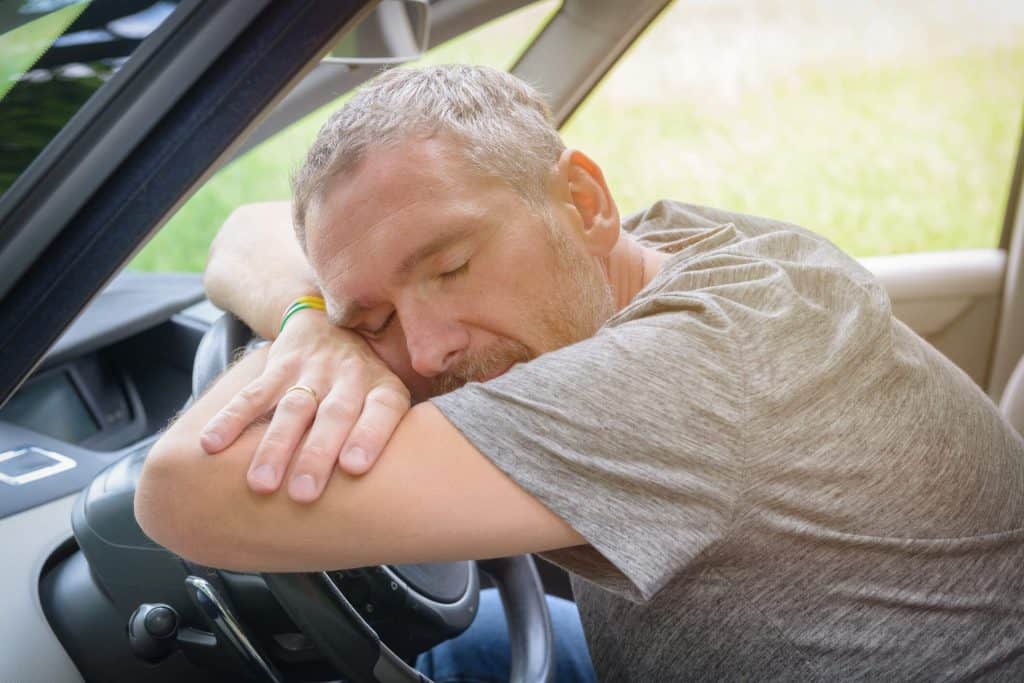
You made a responsible call: you were too drunk to drive, so you decided to sleep it off in your car. It seems like exactly what everyone always says you should do. Then a police officer knocks on your window, and suddenly you are facing a DUI charge without ever having moved the vehicle.
This scenario plays out regularly in Las Vegas, and the answer to whether it can actually result in a conviction is more nuanced than most people expect. The short version is yes, sleeping in your car while intoxicated in Nevada can lead to a DUI arrest. Whether it leads to a conviction depends on the specific facts, and Nevada’s law actually contains a written safe harbor that most people, and most generic legal guides, never mention.
The Short Answer: It Depends on What “Control” Looks Like
Under NRS 484C.110, Nevada makes it illegal not just to drive while intoxicated, but to be in “actual physical control” of a vehicle on a public road or premises while under the influence. That phrase is what makes sleeping in your car legally complicated. You do not have to be moving. You do not even have to have the engine running. If the law considers you in “actual physical control,” you can be charged with a DUI.
The practical consequence is this: a person who walks out of a casino at 2 a.m., realizes they have had too much to drink, gets in their car, and closes their eyes is in a different legal position depending entirely on where they sat, whether the engine is running, and whether they can be said to have driven there while impaired.
What Nevada Courts Look At: The Rogers Factors
The framework Nevada courts use to evaluate “actual physical control” comes from a Nevada Supreme Court case, Rogers v. State, 773 P.2d 1226 (Nev. 1989). That decision identified a totality-of-the-circumstances approach: no single factor is automatically decisive, but some carry significantly more weight than others.
Courts and law enforcement generally focus on:
- Whether the engine was running. A running engine is the single strongest indicator of actual physical control. If the car is on, the analysis gets very difficult for the defense.
- Where the keys were. Keys in the ignition, even with the engine off, signal readiness to drive. Keys in a pocket or a bag are meaningfully different.
- Where the person was sitting. The driver’s seat is the most dangerous position legally. The back seat, or better yet, the cargo area of an SUV, is much more defensible.
- Whether the vehicle was lawfully parked. Sitting in a parking lot versus being stopped partway on a road creates very different impressions about what happened before the officer arrived.
- Whether it appears the person drove there while impaired. This is the hardest one to control. If you parked, then drank, that is very different from driving drunk and then pulling over to sleep.
The Nevada Statute Most People Don’t Know About: NRS 484C.109
In 2014, the Nevada Legislature took an unusual step and codified a specific “sleeping it off” safe harbor into statute. Under NRS 484C.109, a person is deemed not to be in actual physical control of a vehicle if all five of the following are true simultaneously:
- The person is asleep inside the vehicle.
- The person is not in the driver’s seat.
- The engine is not running.
- The vehicle is lawfully parked.
- Under the circumstances, it is evident that the person could not have driven to that location while under the influence.
Here is the critical detail: the statute uses “and” to connect all five conditions. That means all five must be satisfied at the same time. If you are asleep in the passenger seat with the engine off in a legal parking spot, but someone can argue you drove there while drunk, condition five fails, and the safe harbor disappears. If you are in the back seat with the engine off and it is obvious you walked across the street from a bar, all five conditions may be met.
This conjunctive structure is the kind of statutory nuance that makes a real difference in whether a charge gets dismissed or goes to trial, and it is the kind of thing that is worth understanding before a situation arises.
The Las Vegas Parking Situation: A Specific Risk
A significant share of people who end up in this situation in Las Vegas are not local residents. They are visitors who drank on or near the Strip and sensibly decided not to drive back to their hotel.el. What they may not realize is that casino parking garages, surface lots adjacent to the Strip, and hotel parking areas are generally considered “premises to which the public has access” under NRS 484C.110. The DUI statute applies there just as it does on public roads.
This matters because the instinct to “just sleep it off in the parking garage” is not the automatic safe harbor it might seem. The same analysis applies: where were you sitting, was the engine on, and can the officer reasonably argue you drove the car there while impaired? A car parked on Level 3 of a casino garage with the engine running and the driver slumped over the steering wheel is a very different picture than someone curled up in the back seat of a legally parked car near their hotel, phone in hand showing a rideshare receipt they decided not to use.
What to Do If You Have Been Charged
If you woke up to a police officer and are now facing a DUI charge in Clark County, a few things are worth knowing immediately. First, the state has to prove “actual physical control” beyond a reasonable doubt. That is not a low standard, and the facts of sleeping-in-car cases often provide meaningful defense arguments that straightforward driving cases do not. Second, the NRS 484C.109 safe harbor, while specific and demanding, is a codified defense that belongs in the record from the earliest stages of the case. Third, how the arresting officer documented the scene matters enormously: what the report says about key location, engine status, and seat position will shape every argument that follows.
The DUI defense attorneys at Lipp Law LLC have handled DUI cases throughout Las Vegas and Clark County, including cases involving actual physical control where no driving was observed. If you or someone you know is facing a charge like this, a free consultation is available around the clock at (702) 745-4700.
Frequently Asked Questions
Can you get a DUI in Nevada without driving?
Yes. Under NRS 484C.110, the offense extends to being in “actual physical control” of a vehicle while intoxicated, even without moving the car. Whether a sleeping person meets that standard depends on the specific facts of the situation.
Does it matter if my keys were not in the ignition?
It matters significantly. Keys in the ignition, even with the engine off, suggest readiness to drive and weigh toward a finding of actual physical control. Keys in a bag or pocket, combined with other favorable factors, can support the argument that you were not in control of the vehicle.
Is the back seat safer than the front seat legally?
Yes, under NRS 484C.109, being outside the driver’s seat is one of the five required conditions for the safe harbor from a DUI charge. The back seat, or a cargo area, removes one of the most significant factors prosecutors point to. It is not automatically protective, but it is meaningfully better than the driver’s seat
Does the car need to be running for a DUI charge?
No. A running engine strengthens the state’s case considerably, but Nevada courts can find “actual physical control” even when the engine is off, particularly if the keys are accessible and the person is in the driver’s seat.
What if I parked the car and then drank?
This is one of the most important facts in these cases. If you can establish that you drove to a location while sober, parked legally, and then drank, the fifth condition of NRS 484C.109 (“it is evident the person could not have driven there while impaired”) may work in your favor. Evidence like receipts, timestamps, witnesses, or nearby bar tabs can support that timeline.
Can I be charged with a DUI in a casino parking lot in Las Vegas?
Yes. Casino parking garages and hotel lots are generally considered “premises to which the public has access” under NRS 484C.110, so the DUI statute applies in those locations just as it does on public roads.
What should I do if I was charged with DUI while sleeping in my car?
Contact a DUI defense attorney as soon as possible. The details that matter most, including the officer’s report, the location of your keys, the status of the engine, and your seating position, are established early. The sooner an attorney is involved, the better the chance of building an effective defense around the NRS 484C.109 safe harbor and the specific facts of your case.
If you have been charged with DUI in Las Vegas or anywhere in Clark County and the charge involves a parked vehicle or no observed driving, the facts of your case may support a strong defense. Contact Lipp Law LLC at (702) 745-4700 for a free, confidential consultation available 24 hours a day, 7 days a week.


 Lipp Law LLC
 (702) 745-4700
 info@LippLaw.vegas

