

 CALL US NOW
 EMAIL US NOW



A traffic stop is stressful enough without wondering what officers are allowed to do next. One of the most common questions is whether police can search your car without a warrant in Nevada. The short version is that they often can, but only in specific situations. Knowing which ones can help you stay calm, protect your rights, and understand what happened afterward. This guide explains the rules and then walks through a traffic stop step by step.
The Short Answer: Only Through One of Five Doors
Your car gets less protection than your home, because it is mobile and heavily regulated. Still, the Fourth Amendment and Article 1, Section 18 of the Nevada Constitution protect you from unreasonable searches, and Nevada courts treat warrantless searches as improper unless a recognized exception applies. Nevada’s warrant rules are found in Chapter 179 of the Nevada Revised Statutes.
When police search a car without a warrant, one of five doors has to be open:
- Consent. You, or someone with authority over the car, agree to the search.
- Probable cause. Officers have a fair probability that the car contains contraband or evidence of a crime. This is often called the automobile exception.
- A related arrest. You are arrested, and the search falls within the narrow limits the Supreme Court has set.
- An impound inventory. The car is lawfully impounded, and officers inventory what is inside.
- A safety check. Officers reasonably believe you are dangerous and could reach a weapon in the car.
If none of these applies, the search may be unlawful. So when you are trying to understand what happened, the key question is: which door did the officer use? The next section explains each one, and the section after that walks through a stop from start to finish.
The Five Doors Explained
1. Consent
Officers often ask in a casual way: “Do you mind if I take a look in your car?” If you agree, they do not need a warrant or probable cause. Consent has to be voluntary, and you are allowed to say no. Refusing consent does not by itself give officers probable cause. Consent can also be limited, such as to the front seat only, and a person who shares control of the car can consent for it.
2. Probable cause
Under what is called the automobile exception, officers can search a vehicle without a warrant if they have probable cause to believe it contains contraband or evidence of a crime. The Nevada Supreme Court applied this rule in State v. Lloyd (2013). Probable cause is judged by looking at everything together, and it takes more than a hunch.
Things that can contribute include contraband in plain view, an admission, a trained drug-detection dog’s alert, and a combination of suspicious facts. A traffic violation by itself gives officers a reason to stop your car, not a reason to search it. And when officers do have probable cause, they can generally search anywhere in the car where the item could be, including the trunk and closed containers.
Marijuana adds a wrinkle. Adults 21 and older can legally possess it in Nevada, so how much weight an odor carries on its own is less settled than it once was. In a 2025 decision, the Nevada Court of Appeals upheld a vehicle search based on several facts taken together, and it did not decide whether a dog trained to detect marijuana counts as a search now that marijuana is legal.
3. A related arrest
If you are arrested during a stop, the U.S. Supreme Court’s decision in Arizona v. Gant limits when officers can search the passenger compartment without a warrant. It is allowed only if you are unsecured and within reaching distance of the car at the time of the search, or if it is reasonable to believe the car contains evidence of the crime you were arrested for. Once you are handcuffed and away from the car, the first situation rarely applies. And an arrest for something like driving on a suspended license usually gives no reason to expect evidence inside the car. That was the situation in Gant itself, and the search was found unreasonable.
4. An impound inventory
If your car is lawfully impounded, for example after an arrest, officers may inventory what is inside. The purpose is to protect your property and the police from claims, not to hunt for evidence, so it is supposed to follow standard procedures. Anything found during a proper inventory can still be used.
5. A safety check
If officers reasonably believe you are dangerous and may gain immediate control of a weapon, they can check the parts of the passenger area where a weapon could be hidden. This comes from Michigan v. Long. It is limited to looking for weapons, not for drugs or other evidence, although items in plain view during a proper protective search can be seized.
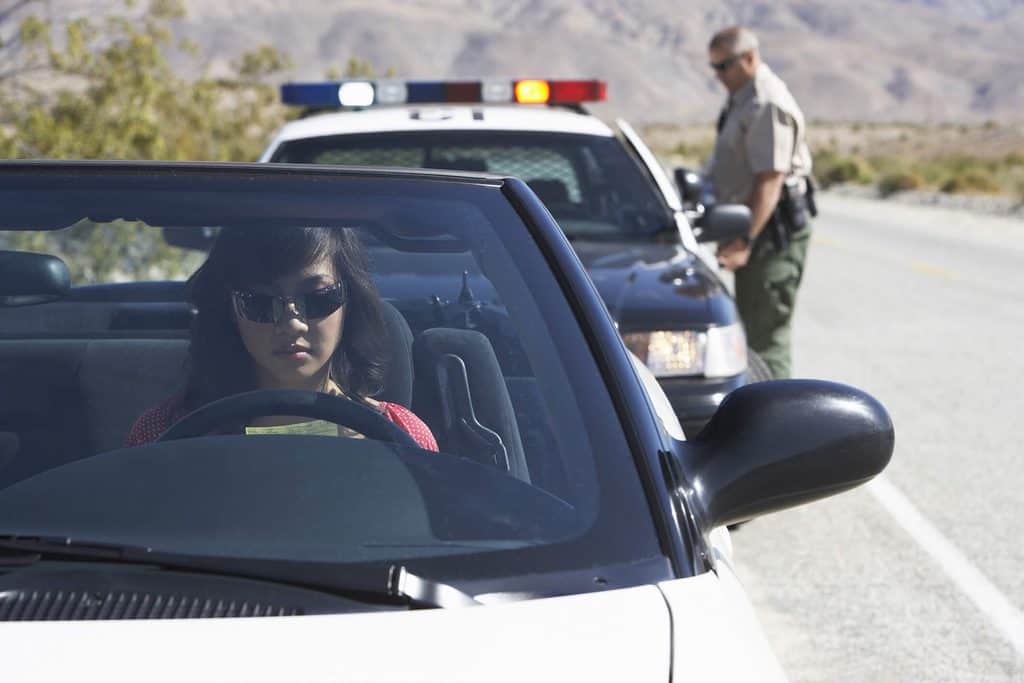
Step by Step: What to Expect During a Traffic Stop
Step 1: Pull over safely and stay calm
Pull over, turn off the engine, turn on the interior light if it is dark, and keep your hands where officers can see them. Officers can ask you to step out of the car during a lawful stop, and courts treat that as a small intrusion, so comply.
Step 2: Provide your documents, and think before you answer questions
Hand over your license, registration, and proof of insurance when asked. Officers may also ask where you are going and where you have been. You are not required to explain your trip or answer questions about what is in the car, and you can politely decline. If you do answer, be accurate and consistent. In that 2025 Nevada case, shifting stories about travel plans and first denying and then admitting there was marijuana in the car were among the facts that added up to probable cause.
Step 3: If an officer asks to search, answer clearly and calmly
If you do not want a search, you can say: “Officer, I do not consent to any searches.” Stay polite and do not argue. If officers search anyway, do not physically resist or block them, even if you think they are wrong. That can lead to new charges, as we explain in our guide on whether resisting arrest is a felony in Nevada. Whether the search was lawful is decided later, not on the roadside.
Step 4: Watch the clock
A traffic stop can last only as long as it takes to handle the reason for the stop, such as checking your documents, running a warrant check, and writing a ticket or warning. In Rodriguez v. United States, the Supreme Court held that officers cannot extend a stop to wait for a drug-sniffing dog unless they have reasonable suspicion of another crime. The Nevada Supreme Court has said a stop can run longer in only three limited situations: you consent, the delay is minimal, or the officer learns something that creates reasonable suspicion. A dog sniff that happens while the officer is still writing the ticket does not extend the stop.
Make a mental note of when the stop began and when your paperwork was finished. Once it is done, you can politely ask, “Am I free to go?”
Step 5: If officers say they have probable cause
Officers may say they smelled something, saw something, or that a dog alerted. Do not argue or interfere, but remember their exact words and what they did next. That matters later, when a lawyer needs to know which door the officers relied on.
Step 6: If you are arrested
Stay calm and do not resist. Your car may be towed and inventoried. Be careful about what you say afterward, including on recorded calls from jail, which we cover in our guide on what not to say on a jail phone call in Nevada.
Step 7: Write down what happened
As soon as you can, write down what happened: the date, time, and location; the agency and the officers’ names or badge numbers; what was said; how long the stop lasted; whether you were asked for consent and what you answered; whether a dog was used; and what was searched. Keep your citation and any paperwork. If a passenger or witness was with you, save their contact information.
Special Situations
If you are a passenger
If officers have probable cause to search a car, they can generally search belongings inside that could hold the evidence, including a passenger’s bag. A passenger can still refuse to consent to a search of their own belongings.
If you are driving a rental car
Many drivers in Las Vegas are in rental cars. The U.S. Supreme Court held in Byrd v. United States that a driver in lawful possession of a rental car generally keeps a reasonable expectation of privacy, even if the driver is not listed on the rental agreement.
Cars are not the only place where these rules come up. Hotel rooms follow different rules, which we explain in our guide on whether police can search your hotel room without a warrant.
How a Car Search Gets Challenged
If something was found during a search and charges followed, the usual tool is a motion to suppress. The court looks at whether the stop itself was lawful, whether it was extended longer than allowed, which of the five doors the officers relied on, whether the search stayed within that door’s limits, and whether consent was truly voluntary. If a court finds the search was unlawful, the evidence may be excluded. That is not automatic, and it depends on the facts.
Quick Checklist for a Traffic Stop
- Pull over safely, keep your hands visible, and stay calm.
- Provide your license, registration, and proof of insurance.
- You can politely decline to answer questions about your trip or what is in the car. If you answer, be accurate and consistent.
- If you do not want a search, say clearly: “I do not consent to any searches.”
- Do not physically resist or block officers, even if you think they are wrong.
- Note when the stop began and when your paperwork was finished, and ask if you are free to go.
- Write down everything you remember as soon as you can.
- If you were arrested or something was found, speak with a criminal defense attorney.
If you or someone you know is facing charges after a car search, contact Lipp Law LLC at (702) 745-4700 for a free consultation.
Frequently Asked Questions
Can police search your car if you say no?
If officers have probable cause or another exception applies, they do not need your consent. If they do not, your refusal means they should not search. Either way, stay calm, do not resist, and raise any challenge later.
Can police search your trunk?
Yes, if they have probable cause and the evidence they are looking for could be in the trunk, or during a proper inventory after a lawful impound. A search incident to arrest is generally limited to the passenger compartment.
Can police use a drug-sniffing dog on your car?
During a lawful stop, a dog sniff of the outside of the car is generally allowed if it does not extend the stop. To hold you longer for a dog, officers need reasonable suspicion of another crime.
Can police search a passenger’s belongings?
If officers have probable cause to search the car, they can generally search belongings inside that could contain the evidence, including a passenger’s bag. Without probable cause, a passenger can decline to consent to a search of their own things.
Can police search a rental car?
The same rules apply. The Supreme Court has held that a driver in lawful possession of a rental car generally has a reasonable expectation of privacy, even if not listed on the rental agreement.
Can police search your car after you are arrested?
Only within limits. Officers can search the passenger compartment if you could still reach it or if it is reasonable to believe it contains evidence of the crime you were arrested for. They may also inventory the car if it is lawfully impounded.


 Lipp Law LLC
 (702) 745-4700
 info@LippLaw.vegas


