

 CALL US NOW
 EMAIL US NOW


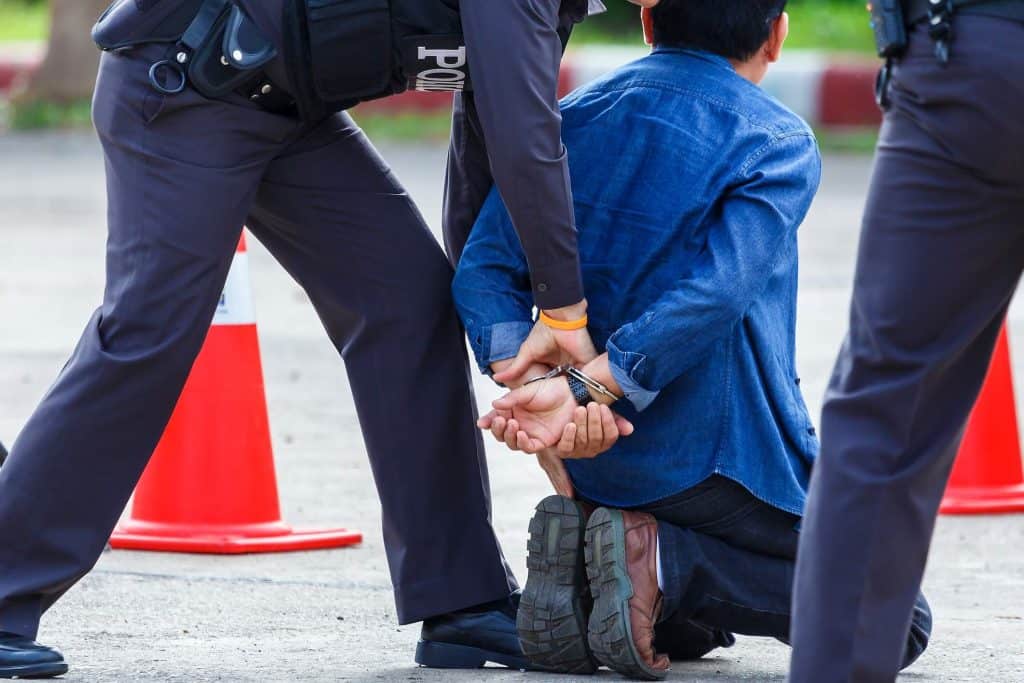
Yes. Under both federal constitutional law and Nevada practice, a police officer can place you in handcuffs without formally arresting you. The legal framework that permits this is well-established, and it has real consequences for what evidence can be used against you if the encounter eventually leads to charges.
Understanding why handcuffing is sometimes lawful without an arrest, and when it crosses into something that requires the same constitutional protections as a formal arrest, is one of the more practically useful things anyone who has experienced or is worried about a police encounter in Nevada should know.
The Short Answer, and Why It Matters More Than You Think
Police in Nevada, as in every state, operate under two distinct levels of seizure recognized by the Fourth Amendment. The first is an investigative detention, commonly called a Terry stop after the 1968 Supreme Court case that established it. A Terry stop requires only reasonable suspicion, a lower standard than the probable cause needed for a formal arrest, and it permits an officer to briefly detain you to investigate suspected criminal activity. The second is a full arrest, which requires probable cause to believe you committed a crime.
The question of handcuffing sits directly between these two categories. Handcuffs are not exclusively an arrest tool. Courts have consistently held that an officer can apply handcuffs during an investigative detention, without formally arresting you and without having probable cause, if the officer can articulate a reasonable basis related to safety that justifies the use of restraints under the totality of the circumstances. Although the use of restraints makes the encounter more intrusive than a typical Terry stop, it does not, by itself, transform the encounter into an arrest.
Why does this matter? Because if a court later determines that the handcuffing crossed the line into what is called a de facto arrest, meaning it had the practical character of an arrest without the legal justification for one, any evidence discovered as a result may be subject to suppression. The handcuffing question is not just about your rights in the moment; it is about whether the fruits of that encounter can be used against you later.
What Happened 50 Feet From the Las Vegas Strip
In 2024, the Ninth Circuit Court of Appeals, the federal appeals court that covers Nevada, decided a case that illustrates exactly how this analysis works in practice, and it arose from a stop conducted by Las Vegas Metropolitan Police Department bicycle officers near the Strip.
Three LVMPD officers on bicycle patrol stopped a vehicle parked in a no-parking zone with a defective taillight. During the stop, one officer observed a Glock on the backseat floor of the car. The driver initially told officers he had no weapons, which was false. The officers then handcuffed him. At the time of handcuffing, the officers had reasonable suspicion to detain him, but they did not yet have probable cause to arrest him: they did not know his criminal history. A records check later revealed prior felony convictions in California, which made his possession of the firearm a federal crime.
The defendant argued that being handcuffed before the officers had probable cause turned the stop into an unlawful de facto arrest. The Ninth Circuit disagreed. The court applied a totality-of-the-circumstances analysis, focusing on whether the officers had a sufficient and reasonable basis to fear for their safety. Key factors in that analysis: the officers were on bicycles without the protection of a patrol car; they were approximately fifty feet from the heavily populated Strip; there was an unsecured firearm visible in the vehicle; and the driver had lied about whether he had weapons. Taken together, those circumstances justified the use of handcuffs during the investigative detention without converting it into a formal arrest requiring probable cause.
This case, decided within the Ninth Circuit and involving LVMPD officers specifically, is directly applicable to how courts in Nevada evaluate handcuffing during investigative stops.
The Four Circumstances Courts Recognize as Justifying Handcuffing During a Detention
Based on Ninth Circuit precedent, including the case above, courts evaluating whether handcuffing during a Terry stop was lawful generally look to whether one or more of the following circumstances were present:
The suspect was uncooperative or took actions that raised a reasonable possibility of danger or flight. The police had information that the suspect was currently armed. The stop occurred shortly after a violent crime. The police had information that a crime that may involve violence was about to occur.
None of these factors is individually required, and the analysis is always fact-specific. But they represent the kinds of circumstances courts point to when upholding handcuffing during a detention that has not yet become a formal arrest. Absent any of these circumstances, handcuffing during a Terry stop is more vulnerable to challenge as exceeding the permissible scope of a Terry stop and constituting a de facto arrest.
What Makes Handcuffing Unlawful During a Detention
Handcuffing becomes legally problematic during an investigative stop when it is not justified by safety concerns, when the detention extends significantly beyond what is reasonably necessary to investigate the original suspicion, or when the totality of the encounter, including the number of officers, the duration, the commands given, and the use of physical force, would lead a reasonable person to conclude that they were under arrest rather than merely being detained. Courts refer to this as the stop ripening into a de facto arrest.
If a court finds that a de facto arrest occurred without probable cause, the consequences are significant: evidence obtained as a result of the unlawful arrest, including physical evidence found on your person or in a vehicle, can be challenged through a motion to suppress. If suppression is granted, the prosecution may lose the evidence it needs to proceed with charges entirely. This is not a theoretical outcome; it is exactly what the trial court ordered in the Las Vegas Strip case before the Ninth Circuit reversed it on appeal.
What You Should Do If You Were Handcuffed During a Stop
If you were placed in handcuffs during an encounter with law enforcement that you believe did not lead to or justify a formal arrest, that experience is worth discussing with an attorney. Whether the handcuffing was lawful under the circumstances, and whether any evidence obtained during or after that encounter is subject to challenge, depends on the specific facts: how the stop began, what the officer observed or claimed to observe, how long you were restrained, what was said, and what followed.
These are Fourth Amendment issues that are argued at the suppression stage before trial, and they require careful factual investigation and legal analysis to evaluate correctly. The window to raise suppression arguments is not unlimited; it exists within the pretrial litigation process, and taking steps early makes a meaningful difference.
At Lipp Law LLC, our criminal defense practice includes Fourth Amendment challenges to unlawful stops, detentions, and searches in Las Vegas and throughout Clark County. If you were handcuffed, searched, or charged following what you believe was an unjustified police encounter, our Las Vegas criminal defense attorney can review the specific facts and explain whether a suppression challenge is viable in your situation. Call (702) 745-4700 any time, including evenings and weekends, for a free and confidential consultation.
Frequently Asked Questions: Handcuffing Without Arrest in Nevada
Does being handcuffed mean I am under arrest in Nevada?
Not automatically. Under both federal and Nevada law, officers can apply handcuffs during an investigative detention without formally arresting you, provided they can articulate a reasonable safety basis for the restraint under the circumstances. Being placed in handcuffs is a strong indicator that your freedom of movement has been substantially restricted, but courts evaluate whether the overall encounter constitutes an arrest based on the totality of the circumstances, not just the presence of handcuffs.
What is a “de facto arrest” in Nevada?
A de facto arrest is when a police encounter, even if the officer does not formally announce an arrest, has the practical character of an arrest: the level of restraint, the duration, and the overall conduct of the officers would lead a reasonable person to understand they are under arrest rather than temporarily detained. A de facto arrest requires probable cause just like a formal arrest does. If police actions amounted to an arrest unsupported by probable cause, evidence obtained from that encounter may be suppressible.
What is the legal standard for police to handcuff someone without arresting them?
Officers must be able to articulate a reasonable basis, generally related to officer safety, that justifies the use of handcuffs during an investigative detention. Courts apply a totality-of-the-circumstances analysis and consider factors including whether the suspect was uncooperative, whether there was reason to believe the suspect was armed, whether the stop followed a violent crime, and whether there was a reasonable possibility of danger or flight.
Can evidence be suppressed if police handcuffed me without legal justification?
Potentially, yes. If a court determines that unjustified handcuffing converted a Terry stop into a de facto arrest without probable cause, evidence discovered as a result of that unlawful arrest can be challenged through a motion to suppress. If suppression is granted, the prosecution may be unable to proceed with charges based on that evidence. This is a pretrial issue that must be raised through the court process, and the specific facts of your encounter determine whether suppression is a viable argument.
Do I have to answer police questions if I am handcuffed but not arrested?
You have the right to remain silent regardless of whether you are under formal arrest or merely detained. If you are in custody, meaning your freedom is significantly restricted in a way that a reasonable person would not feel free to leave, Miranda warnings should be given before custodial interrogation. Whether handcuffing constitutes custody for Miranda purposes depends on the specific circumstances, but in general, you do not have to answer police questions beyond basic identification requirements, and invoking your right to remain silent and to speak with an attorney before answering questions is almost always the right choice when you are uncertain about your legal situation.



 Lipp Law LLC
 (702) 745-4700
 info@LippLaw.vegas

